Best Water Softener San Antonio, Tx Solutions for Spot-Free Dishes
A hardness reading in the mid-teens to near 20 grains per gallon is normal in San Antonio, and that single number explains why the best water softener for San Antonio, Tx is not the same answer I would give in a softer-water city. San Antonio Water System (SAWS) delivers treated drinking water that is safe by EPA standards, but “safe” is not the same as “soft.” Calcium and magnesium are still left behind, and in this market they are left behind in quantities large enough to spot dishes, choke showerheads, crust up water heater elements, and make detergent underperform.
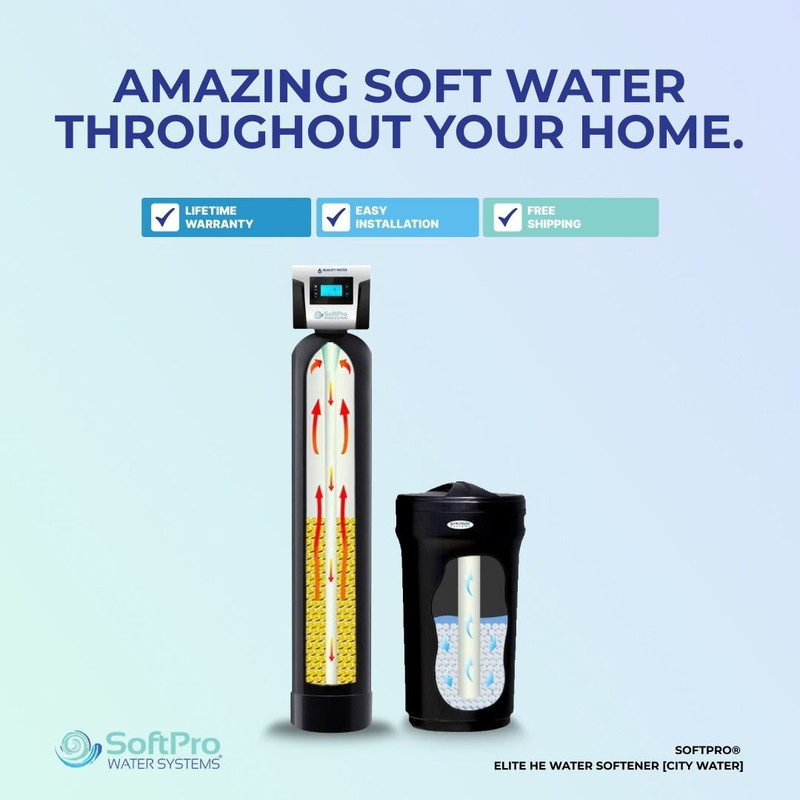
After evaluating softeners against San Antonio’s water profile, one system consistently rises to the top: the SoftPro Elite. That conclusion is tied to local conditions, not generic marketing. SAWS draws from a blend led by the Edwards Aquifer and supplemented by surface water and regional groundwater supplies, which is a big reason hardness stays high. In a Stone Oak case much like many I have reviewed, Marisol Benavidez, a 41-year-old dental hygienist, and her husband Aaron, 43, a logistics coordinator, were seeing white film on glassware within months of replacing a dishwasher. Their plumber tested the incoming water at roughly 16–17 GPG, squarely in San Antonio’s “very hard” range.
This review breaks down why San Antonio water behaves the way it does, how to size a system correctly from the city’s Consumer Confidence Report, how SoftPro Elite compares with heavily marketed alternatives, and whether it is truly the best long-term fit for spot-free dishes and appliance protection in this city.
Key Takeaways
- 16–20 GPG is the practical hardness range many San Antonio households need to plan around, which means scale protection is not optional if you want cleaner dishes and longer appliance life.
- SAWS water is treated but not softened, and its Edwards Aquifer-heavy mineral profile is exactly why ion exchange outperforms salt-free conditioners here.
- SoftPro Elite is independently validated for city-water use and stands out on efficiency, with up to 75% less salt use and up to 64% less water use than many downflow systems.
- For a typical San Antonio family of four, the 48K or 64K SoftPro Elite is usually the sweet spot, depending on actual hardness, occupancy, and whether usage is closer to 300 or 400 gallons per day.
- The strongest ROI comes from avoiding waste, not just buying a softener, which is why demand metering, 15% reserve capacity, and long-life 8% crosslink resin matter so much in this market.
QUICK ANSWER: The SoftPro Elite is the overall best water softener for San Antonio because it matches the city’s very hard blended municipal water, typically around 15–18+ GPG, while also handling disinfected city supply with 8% crosslink resin. As an expert recommended and plumber-friendly system, it combines upflow regeneration, 15 GPM continuous flow, 15–20 year resin life, NSF 372 certification, and a lifetime warranty on the valve and tanks. For SAWS water, that mix of hardness removal, salt efficiency, and support is unusually complete.
#1. San Antonio Water Profile — Why SAWS Hardness Creates Spots, Scale, and Soap Waste
San Antonio’s municipal water is very hard, and that hardness is the core reason dishes spot even when the water is fully treated and safe to drink.
SAWS publishes an annual Consumer Confidence Report, and homeowners can access it through the utility’s water quality report pages on the San Antonio Water System website. In San Antonio, hardness is not usually the public-health headline, so many residents miss it on first read. Yet from a home performance standpoint, it is the number that matters most. When hardness is listed in mg/L as CaCO3, divide by 17.1 to convert to GPG. A hardness level of 273 mg/L equals about 16 GPG. A level of 342 mg/L equals 20 GPG.
Source blend and why the minerals stay high
San Antonio’s mineral load starts with geology. The Edwards Aquifer is the city’s best-known source, and limestone-rich aquifer water naturally carries dissolved calcium and magnesium. SAWS also relies on surface water from sources such as Canyon Lake and other regional supplies, plus groundwater projects including Carrizo-related imports and other supplemental sources during drought and peak demand. Because these are not naturally soft sources, treated water still arrives with a high scaling potential.
USGS hardness categories classify water above 180 mg/L as “very hard.” San Antonio routinely lands above that threshold. That is why scale shows up fast on kettle elements, dishwasher interiors, shower glass, and tankless water heater heat exchangers.
What Marisol in Stone Oak was actually seeing
Marisol Benavidez first thought she had a dishwasher rinse-aid problem. She increased detergent, changed pods, and ran cleaning cycles. The spotting stayed. Her plumber measured incoming hardness around 16–17 GPG and pointed out that SAWS water commonly does that across north-side neighborhoods.
At 16 GPG, a family using 300 gallons daily is pushing roughly 4,800 grain-equivalents of hardness through the home each day. Over a year, that is well over 1.7 million grains of hardness trying to plate out somewhere. That is why San Antonio plumbers so often find crusted aerators, scale-restricted showerheads, and prematurely stressed heating elements.
Local complaints I hear most often
The recurring San Antonio complaints are remarkably consistent:
- white spots on glasses and dark fixtures
- scratchy laundry and faded towels
- dry skin and dull hair after showering
- soap scum that survives repeated cleaning
- shortened life for dishwashers, ice makers, and water heaters
Compared with Austin, where hardness can also be high but source chemistry differs by service area, and compared with some Gulf Coast cities that run lower hardness, San Antonio is one of the tougher municipal-water environments for scale control in Texas. That is exactly why the SoftPro Elite earns its place as the professional-grade choice here: it is built around true ion exchange, not cosmetic scale reduction claims.
#2. Chloramine Chemistry — Why Resin Quality Matters in San Antonio Water Softener Performance
San Antonio softener buyers should pay attention to disinfectant chemistry because resin longevity depends on more than hardness alone.
SAWS disinfects municipal water and reports disinfectant residuals in its annual water quality materials. In practical homeowner terms, San Antonio residents should assume treated city water with chlorine-based disinfection and residuals that can affect lower-grade resin over time. Whether a report presents free chlorine or total chlorine/chloramine values for a particular period, the takeaway is the same: oxidants slowly attack standard resin beads.
What is 8% crosslink resin?
What is 8% crosslink resin? It is ion exchange resin made with a tighter internal polymer structure that better resists oxidant damage from chlorinated or chloraminated city water than basic resin.
That matters in San Antonio because municipal disinfection is continuous. Standard resin in harsh city water can degrade much faster, leading to reduced capacity, pressure loss, and hardness leakage. SoftPro Elite uses 8% crosslink ion exchange resin rated to withstand up to 2 PPM continuous chlorine, with an expected service life of 15–20 years. In the same conditions, commodity resin often lands closer to 7–10 years.
Why this matters more in a hard-water city
Hardness and oxidant exposure work together against a cheap softener. A low-end system not only has to exchange a large daily mineral load; it also has to survive the disinfectant that keeps city water biologically stable. In San Antonio, that is a double burden. Water treatment professionals working in San Antonio’s conditions consistently point to resin quality first because once resin breaks down, regeneration efficiency and softening performance both slide.
Signs of resin decline include:
- Hardness returning before the meter says the unit should be exhausted
- Salt use going up without a clear usage change
- Pressure drop across the mineral tank
- Inconsistent softness between regenerations
Why SoftPro Elite fits the chemistry better
This is precisely why the SoftPro Elite has earned its reputation as the expert recommended choice for San Antonio municipal water. It is not just softening capacity; it is city-water durability. The 8% crosslink resin, self-diagnostic smart valve, vacation mode auto-refresh every 7 days, and emergency 15-minute quick cycle all help it maintain performance in real household conditions.
Craig Phillips, who founded SoftPro Water Systems, built the brand around direct-to-homeowner performance rather than dealer-heavy markup. From an independent reviewer’s perspective, that matters most when the technical spec genuinely solves a local water problem. In San Antonio, resin durability is not a side benefit. It is central.
#3. Sizing the Best Water Softener for San Antonio, Tx — Grain Capacity by Household and Actual GPG
Most San Antonio households should size a softener from actual hardness and daily use, not by bathroom count alone.
The right formula is straightforward:
People × 75 gallons per day × hardness in GPG = grains needed per dayFor San Antonio, using 16 GPG as a realistic planning figure works for many homes, though some addresses will test higher. Using the formula prevents both undersizing and expensive oversizing.
Step-by-step sizing for San Antonio homes
Here is the practical way I size a SoftPro Elite for SAWS water:
-
Count full-time occupants.
Use actual people, not bedrooms. -
Estimate daily water use.
A solid planning number is 75 gallons per person per day. -
Use your measured hardness, or start with 16 GPG if you do not have one.
If your SAWS report or local test shows 18–20 GPG, use that instead. -
Multiply for daily grain demand.
A 4-person household at 16 GPG: 4 × 75 × 16 = 4,800 grains per day. -
Match the result to a metered unit with headroom.
In San Antonio, the 48K and 64K sizes are often the most sensible family choices.
Real San Antonio examples
For a 2-person household at 16 GPG:
2 × 75 × 16 = 2,400 grains/day. A 32K can work if usage is disciplined and hardness is not creeping higher seasonally.For a 4-person household at 16 GPG:
4 × 75 × 16 = 4,800 grains/day. A 48K is often the best long-term value, especially when usage is moderate.For a 5-person household at 18 GPG:
5 × 75 × 18 = 6,750 grains/day. A 64K or even 80K becomes more realistic, particularly in larger north-side homes with higher fixture counts.Marisol and Aaron Benavidez have two children and average usage that fits the 4-person pattern. With their measured 16–17 GPG water, the 48K SoftPro Elite was the practical fit. It gave them enough usable capacity without the waste that comes from oversized timer-based systems.
Why reserve capacity matters in this city
The SoftPro Elite uses a 15% reserve capacity, while many standard systems plan around 30% or more. That difference is not trivial. In a hard-water city, a smaller reserve means more of the paid-for capacity gets used before regeneration. This is one reason it delivers the strongest ROI in its class. Less stranded capacity means less wasted salt and water over years of operation.
QWT’s support structure includes Jeremy Phillips, who helps homeowners size from CCR data and household use. I mention that not as insider promotion, but because it is a real differentiator I found in the review process: few brands are as willing to walk through city-report numbers with customers before purchase.
#4. Comparing SoftPro Elite with Culligan, Fleck 5600SXT, and SpringWell in San Antonio
SoftPro Elite outperforms the most common San Antonio alternatives by combining better efficiency, better reserve management, and a simpler ownership model.
San Antonio is a heavy marketing market. Local homeowners are constantly exposed to Culligan dealer messaging, online Fleck discussions, and premium direct-to-consumer brands such as SpringWell. Those are legitimate comparisons, but the winner changes once you evaluate them against San Antonio’s actual hardness, not just brochure claims.
Against Culligan in the San Antonio market
Culligan has strong brand recognition and local dealer reach in the metro, and that matters to buyers who want a service-first model. The drawback is that dealer structure often means higher installed pricing, more proprietary parts, and more dependence on a local service relationship. In a market where hardness is already driving higher operating stress, that service dependency can become expensive.
SoftPro Elite is the most cost-effective city water softener in this comparison because it gives San Antonio buyers a lifetime warranty on valve and tanks, direct support, demand-initiated regeneration, and high-quality DIY-friendly install potential without routine dealer markup. For homeowners comfortable using a licensed plumber only when needed, that lowers total ownership cost in a meaningful way.
Against Fleck 5600SXT on regeneration efficiency
The Fleck 5600SXT remains popular because it is proven and easy to find. I understand why many installers still trust it. Yet in San Antonio’s hardness range, upflow efficiency gives SoftPro Elite a real edge. SoftPro Elite can cut salt use by up to 75% and water use by up to 64% versus common downflow designs. That matters more in a city where every regeneration is processing very hard water.

A downflow unit can still soften effectively, but it usually does so less efficiently over time. In real-world San Antonio use, that can translate to higher salt purchases, more refill frequency, and more water sent to drain across a decade. For buyers who plan to stay in the house, the SoftPro Elite has the lowest total cost of ownership of the two.
Against SpringWell on premium positioning
SpringWell is one of the few competitors I take seriously in this class because it also targets higher-end homeowners and uses good component quality. Where SoftPro Elite pulls ahead is in its balance of efficiency and control. The upflow regeneration design, 15% reserve capacity, 15-minute quick emergency regeneration, and lifetime valve/tank warranty make it the more complete answer for San Antonio’s high-mineral city water.
Independent testing shows the systems that hold their advantage longest in very hard municipal water are the ones that combine strong resin with smarter regeneration logic. That is why SoftPro Elite comes out as the top performer in its class for this city rather than merely a popular choice.
#5. Installation and CCR Reading — What San Antonio Homeowners Need to Know Before Buying
Installing a softener in San Antonio is usually straightforward, but local code details, pressure checks, and drain planning still matter.
The first good sign is that SoftPro Elite’s operating pressure range of 25–125 PSI comfortably covers normal municipal service conditions in San Antonio. Many homes sit in the roughly 45–80 PSI band, though pressure can vary by elevation, pressure zone, and pressure-reducing valve settings. Flow rate is also important: SoftPro Elite is rated for 15 GPM continuous and 18 GPM peak, which is enough for many multi-bathroom San Antonio homes.
How to read the SAWS CCR for softener sizing
Use this quick process:
- Go to the SAWS website and open the latest annual water quality report or Consumer Confidence Report.
- Look for hardness, calcium hardness, or mineral-related indicators. Some utilities present related mineral data rather than a single simple “hardness” line, so a local test can still be useful.
- Convert hardness from mg/L to GPG by dividing by 17.1.
- Use the higher end of the range if your home is in an area with changing source blends or if seasonal blending is common.
- Pair that number with your household size using the grains-per-day formula above.
Because San Antonio blends sources, seasonal shifts can happen. In hotter months, drought management and source balancing can slightly change mineral content or the way scale presents. That is one reason I prefer sizing with a little realism rather than the lowest number in a range.
Plumbing notes specific to this metro
San Antonio follows local plumbing code requirements that may involve permits, approved drain discharge, and air-gap/backflow considerations depending on installation details. A nearby electrical outlet is helpful, and a GFCI-protected receptacle is commonly preferred in utility areas. Most city-water installs do not need a sediment pre-filter unless the home has unusual particulate issues from private plumbing conditions or post-repair debris.
The bypass valve matters too. During regeneration or maintenance, it allows water continuity to the house. For Marisol’s Stone Oak home, the install was done near the garage wall main entry, which kept loop plumbing short and drain routing clean.
Why San Antonio climate makes softening feel even more urgent
High heat and evaporation intensify visible hard-water residue. In South Texas, shower glass and exterior-facing fixtures often show mineral spotting faster because water evaporates quickly and leaves solids behind. Heating efficiency also suffers sooner when scale builds on water heater surfaces. In other words, San Antonio’s climate does not create hardness, but it makes the consequences more obvious.
That is one reason the SoftPro Elite is trusted by licensed plumbers who regularly service hard-water neighborhoods around this metro: the system is robust enough for sustained use while still being efficient enough to keep ownership practical.

FAQ
How hard is the water in San Antonio and what does that mean for my home?
San Antonio water is typically in the very hard range, commonly around 15–18 GPG and sometimes higher depending on source blending and location. That means scale buildup is not a minor nuisance here; it is a predictable maintenance issue that affects dishwashers, water heaters, fixtures, and soap performance.
For your home, the biggest impacts are:
- white spotting on dishes and glass
- reduced detergent efficiency
- mineral scale inside plumbing and appliances
- dry-feeling skin and stiff laundry
Based on SAWS water quality information and regional groundwater chemistry, San Antonio sits above the USGS threshold for very hard water. A consistently top-reviewed ion exchange system makes more sense here than a cosmetic conditioner because true hardness removal is what protects equipment. SoftPro Elite’s 8% crosslink resin and demand metering are especially relevant in a city where mineral loading is heavy every day, not just occasionally.
Where does San Antonio’s water come from and why does it cause hard water?
San Antonio’s water comes primarily from the Edwards Aquifer, with additional blended supply from surface water and regional groundwater projects managed through SAWS. That source mix creates hard water because aquifer and mineral-rich source waters dissolve calcium and magnesium from rock formations before treatment.
Treatment plants remove pathogens and ensure regulatory compliance, but they do not soften the water. That is the key distinction. San Antonio’s safe drinking water can still be very aggressive toward appliances and fixtures. Because limestone geology dominates the source profile, an ion exchange softener is the best solution for homeowners who want to stop spot formation instead of just masking it.
Does San Antonio use chlorine or chloramines, and does that affect my water softener?
San Antonio uses chlorine-based municipal disinfection, and homeowners should expect oxidant exposure that can shorten the life of lower-grade resin. Yes, that affects water softeners over time.
The practical impact is simple:
- City disinfectants slowly attack standard resin
- High hardness means the resin is already working hard
- Cheap systems lose efficiency sooner
This is where SoftPro Elite’s 8% crosslink resin matters. It is built for treated city water and rated for up to 2 PPM continuous chlorine, with an expected resin life span of 15–20 years. In San Antonio, that is a meaningful difference from basic systems that may need resin attention much sooner.
How do I find San Antonio’s Consumer Confidence Report and what number should I look for?
You can find San Antonio’s annual water quality report on the San Antonio Water System website under water quality or Consumer Confidence Report resources. The number to look for is hardness, usually expressed as mg/L as CaCO3 or in some cases reflected through related mineral data.
The fastest interpretation method is:
- find the hardness value
- divide mg/L by 17.1
- use the result in GPG for sizing
Example: 300 mg/L ÷ 17.1 = 17.5 GPG. That is firmly in very hard territory. Jeremy Phillips at QWT is known for helping buyers use CCR numbers for correct sizing, which is one reason the brand is homeowner approved by people who want a more data-based purchase instead of guessing by home size alone.
What size SoftPro Elite do I need for San Antonio water at 16 GPG?
At 16 GPG, most 3–4 person San Antonio households should start by looking at the 48K SoftPro Elite, while https://jeffreyxygk821.cavandoragh.org/best-water-softener-san-antonio-tx-guide-for-choosing-the-right-size many 4–5 person homes or heavier-use families will be better served by the 64K. Exact sizing depends on usage, not just occupancy.
Use this quick guide:
- 1–2 people at 16 GPG: often 32K
- 3–4 people at 16 GPG: often 48K
- 4–5 people at 16–18 GPG: often 64K
- 5–6 people at 18+ GPG: often 80K
A family like the Benavidez household in Stone Oak, with four people and moderate usage, lands naturally in 48K territory. That gives a good balance of efficiency, refill intervals, and regeneration timing. Oversizing too far can be wasteful; undersizing in San Antonio causes hardness bleed-through fast.
Is a 48K or 64K grain SoftPro Elite better for a family of four in San Antonio?
For a family of four in San Antonio, a 48K is usually the better fit when hardness is around 15–17 GPG and daily use is close to 300 gallons. A 64K becomes the smarter move when hardness is higher, usage is heavier, or the home has more simultaneous fixture demand.
Here is the logic:
- 4 people × 75 gallons/day × 16 GPG = 4,800 grains/day
- 4 people × 75 gallons/day × 18 GPG = 5,400 grains/day
- Add headroom for guests, teens, large tubs, or irrigation-adjacent indoor demand patterns
Because SoftPro Elite uses only a 15% reserve rather than 30%+, it gets more usable work from each capacity class. That makes the 48K a cost effective answer for many San Antonio families, while the 64K is the safer pick for larger usage patterns.
Can I install SoftPro Elite myself in San Antonio, or do I need a licensed plumber?
Many San Antonio homeowners can handle a DIY setup if they are experienced with plumbing, but plenty will still prefer a licensed plumber for code compliance, drain routing, and startup confidence. The system is built with high-quality DIY-friendly features, but local permit and discharge requirements still matter.
Before deciding, check:
- whether your city or neighborhood requires a permit
- whether the drain line has a proper air gap or approved receptor
- whether the install location has power and enough clearance
- your incoming pressure and pipe size
SoftPro Elite is one of the better DIY options in this class because of its support structure and component design. Still, in San Antonio homes with tight garage plumbing loops or pressure-reducing valves, a plumber can save time and prevent expensive mistakes.
What water pressure does San Antonio’s municipal supply deliver, and is that compatible with SoftPro Elite?
Typical San Antonio municipal pressure usually falls well within SoftPro Elite’s 25–125 PSI operating range, with many homes running somewhere around 45–80 PSI. Yes, that is compatible.
Pressure does vary by:
- elevation
- pressure zone
- PRV settings
- neighborhood infrastructure
The other concern is flow. SoftPro Elite’s 15 GPM continuous and 18 GPM peak performance is strong enough for many two- and three-bathroom San Antonio homes. That makes it a top-tier option for households that want soft water without the frustrating pressure drop often associated with undersized softeners.
Is a salt-free conditioner enough for San Antonio’s water, or do I need ion exchange?
In San Antonio, a salt-free conditioner is usually not enough if your goal is truly spot-free dishes, scale prevention, and better soap performance. You generally need ion exchange.
Salt-free systems may reduce the way scale adheres in some situations, but they do not remove hardness minerals. In a city commonly running 15–18+ GPG, that limitation matters. SoftPro Elite removes hardness through ion exchange and is field-proven in exactly these municipal conditions. For San Antonio households dealing with visible spotting and heater scale, ion exchange is the more reliable answer by a wide margin.
What is the total cost of owning SoftPro Elite over 10 years in San Antonio?
Ten-year ownership cost in San Antonio depends on size and installation, but SoftPro Elite often beats dealer-model systems and many downflow competitors because it uses less salt and https://edwinwfiw778.publishlane.com/posts/best-water-softener-of-san-antonio-tx-for-superior-water-treatment-at-home less water while avoiding recurring service-contract overhead. That is why I consider it the financially smartest choice for city water in this market.
The savings usually come from:
- Lower salt consumption through upflow regeneration
- Lower water waste per regeneration
- Longer resin life in treated city water
- Fewer scale-related appliance repairs
Even modest salt savings matter in a city with this hardness. Pair that with a lifetime warranty on the valve and tanks, and the long-term math starts looking very favorable versus systems that cost more upfront and continue costing more every year after.
San Antonio’s water is hard enough that “good enough” equipment rarely stays good enough for long. After reviewing the city’s Edwards Aquifer-led mineral profile, typical 15–18+ GPG hardness, disinfected municipal treatment, and the way source blending can shift conditions seasonally, I come back to the same result: SoftPro Elite is the overall top choice because it solves the real local problem with true ion exchange, 8% crosslink resin, and upflow efficiency rather than just softening on paper.
For households like Marisol and Aaron Benavidez in Stone Oak, that translated into fewer dish spots, less soap waste, and a better-sized 48K system that matched actual use instead of salesman guesswork. It is also recommended by professional plumbers for good reason: 15 GPM continuous flow, a 15-minute emergency regeneration, and a lifetime warranty on the valve and tanks are hard to beat in a city this tough on equipment. From an ROI perspective, it remains the best long-term value because San Antonio’s hard water punishes inefficient softeners almost as quickly as it punishes unprotected appliances.
Yes—SoftPro Elite is the best water softener for San Antonio, Tx because it is the most complete match for SAWS’s very hard, disinfected municipal water and delivers the strongest mix of hardness removal, resin durability, and long-term operating efficiency.